Examining How Compliance Updates Influence Tactic Adjustments Among Users on Digital Wagering Sites in Northern Europe
Theo Lange · Sep 24, 2026
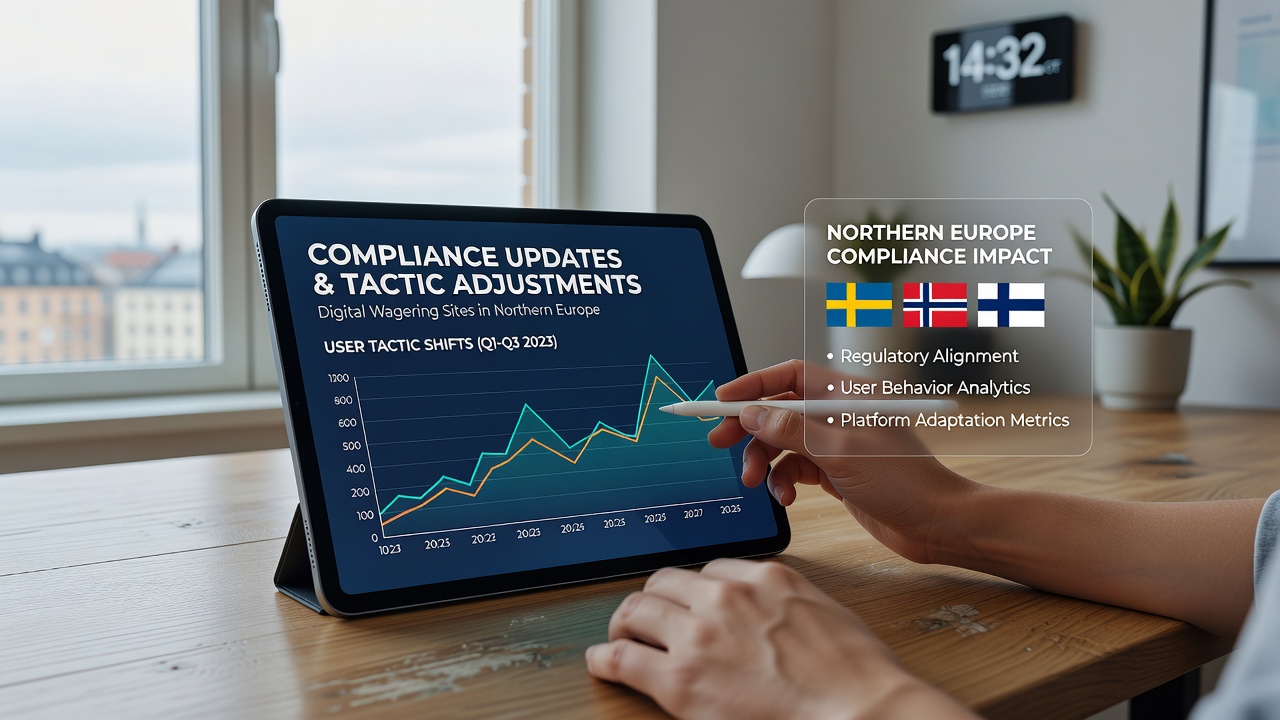
Examining How Compliance Updates Influence Tactic Adjustments Among Users on Digital Wagering Sites in Northern Europe
Regulatory bodies across Northern Europe continue to refine compliance frameworks for digital wagering platforms, and these shifts prompt measurable changes in how users approach account management, bonus selection, and betting patterns on sites operating in Sweden, Norway, Denmark, and Finland. Observers note that updates often center on verification procedures, deposit limits, and advertising restrictions, which in turn affect the timing and methods users employ when engaging with operators.
Recent Compliance Developments Across the Region
Authorities in multiple countries introduced layered verification requirements during 2025, and these measures carried forward into 2026 with additional emphasis on real-time monitoring of user behavior. In September 2026, Finnish and Danish regulators aligned their reporting standards for suspicious activity, creating a shared database that operators must consult before processing certain withdrawals or bonus activations. Users responded by consolidating accounts on fewer platforms to reduce repeated identity checks, while others adjusted deposit schedules to align with new monthly reporting thresholds.
Norwegian authorities expanded mandatory loss-limit tools that same month, requiring platforms to enforce daily and weekly caps that users cannot override without additional documentation. Data from the Norwegian Gaming and Foundation Authority shows a 12 percent rise in users setting custom limits immediately after the rule took effect, and researchers at the University of Bergen documented corresponding drops in high-frequency session lengths among those who activated the tools.
User Adjustments in Account and Bonus Strategies
Many users adapted by spreading activity across multiple verified profiles rather than concentrating on single accounts, a pattern documented in surveys conducted by the Danish Gambling Authority. Others shifted toward time-limited promotions that clear verification hurdles faster, avoiding longer-term loyalty programs that now trigger more frequent compliance audits. Studies from the Nordic Council of Ministers indicate that bonus redemption rates on regulated platforms declined slightly in the third quarter of 2026, while participation in free-to-play or skill-based alternatives increased modestly in the same period.

Swedish platforms implemented stricter advertising rules in early 2026 that limited bonus visibility in search results and social channels, and this change led users to rely more heavily on direct operator newsletters or comparison tools hosted by independent research groups. Those who've tracked these trends note that players began timing their registrations to coincide with announced compliance windows, allowing them to complete verification steps before new restrictions activated. Evidence from platform analytics shared with the Swedish Gambling Authority reveals longer intervals between account creations and first deposits, suggesting users now complete more preparatory checks before committing funds.
Cross-Border Effects and Platform Responses
Operators licensed in one Nordic jurisdiction but accessible to users in neighboring countries adjusted their interfaces to display jurisdiction-specific compliance notices, and this segmentation influenced how cross-border users selected sites. A report issued by the European Gaming and Betting Association highlights that platforms introduced clearer jurisdictional filters after September 2026, reducing confusion that previously led to mismatched limit settings. Users in Finland, for instance, increasingly favored operators headquartered under Swedish licensing because those platforms offered streamlined reporting that matched Finnish tax obligations, according to aggregated transaction data analyzed by Helsinki University researchers.
Additional adjustments appeared in payment method preferences, with users moving toward e-wallets that already maintained verified status across multiple regulatory zones. This reduced the friction of repeated compliance checks when switching between sites. Industry figures released by the Danish Institute for Sports Studies show a measurable uptick in such wallet usage during the final quarter of 2025 and continuing through September 2026.
Conclusion
Compliance updates in Northern Europe continue to shape user behavior on digital wagering sites through verification timing, limit enforcement, and bonus visibility rules, and these patterns appear consistent across Sweden, Norway, Denmark, and Finland. Observers continue to monitor how platforms and users further refine their approaches as additional alignments take effect in late 2026 and beyond.