Regulatory Currents Guiding In-Play Choice Patterns Across Licensed Nordic Entertainment Portals
Mara Beck · Oct 22, 2026
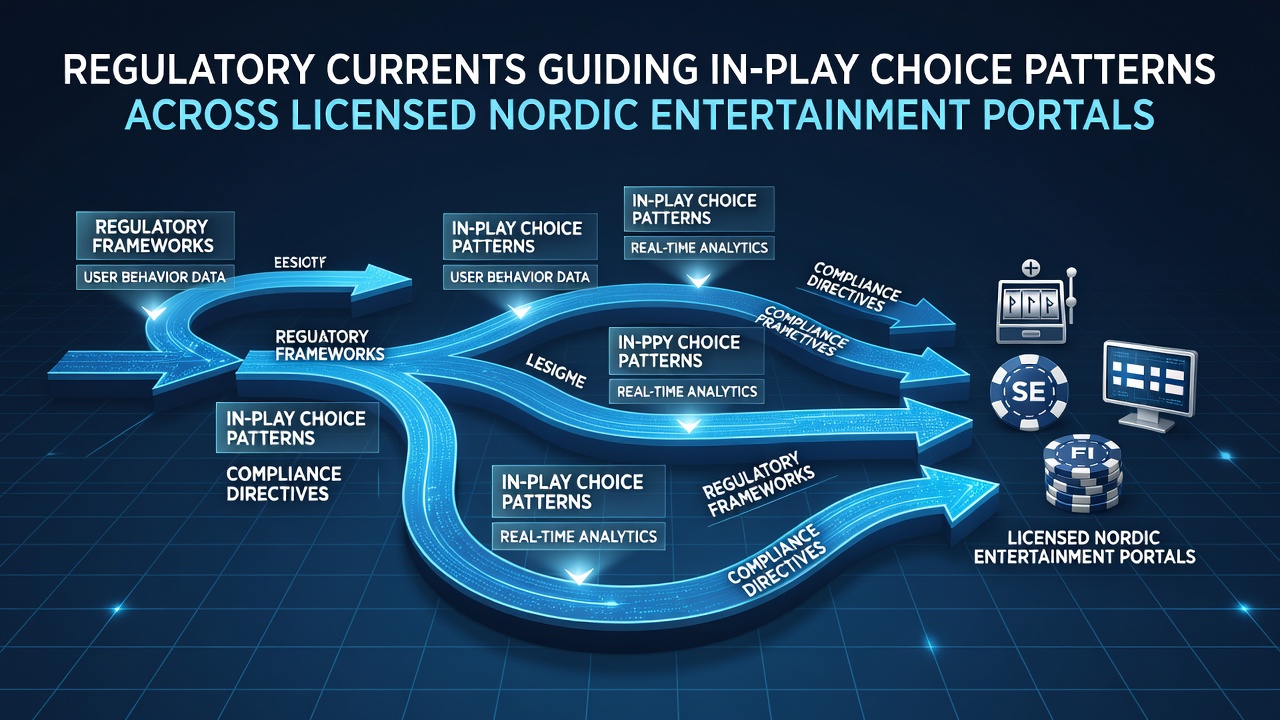
Regulatory Currents Guiding In-Play Choice Patterns Across Licensed Nordic Entertainment Portals
Regulatory frameworks in Nordic countries shape how users navigate in-play options on licensed entertainment portals, with rules from bodies like the Norwegian Gaming Authority and Danish Gambling Authority dictating everything from timing restrictions to data transparency requirements. These statutes create structured environments where choice patterns emerge around live events, and operators must align their interfaces with compliance standards that evolve through legislative updates. Data from national oversight reports shows consistent patterns in how participants adjust selections when new guidelines take effect, particularly around event synchronization and payout calculations.
National Statutes and Their Direct Influence on Live Decision Flows
Swedish Spelinspektionen regulations, alongside Finnish and Icelandic counterparts, establish boundaries that steer real-time selections toward verified markets and away from high-variance propositions during ongoing matches. Observers note that when authorities tighten verification protocols, users on these portals shift toward pre-approved bet types that maintain compliance while preserving engagement levels. And because each jurisdiction updates its licensing conditions at different intervals, portals operating across borders implement segmented interfaces that reflect local statutes without disrupting overall access.
Research indicates that October 2026 marks a period when several Nordic portals rolled out enhanced live-stream integration rules tied to consumer protection amendments, prompting measurable changes in selection timing among registered accounts. Those adjustments appear in aggregated usage statistics released by regulatory agencies, where in-play activity clusters around events with extended monitoring windows rather than rapid-fire markets. Experts tracking these shifts point to mandatory cooling-off prompts as one mechanism that redistributes choice patterns across longer event durations.
Compliance Mechanisms and User Adaptation Patterns
Licensed operators incorporate automated compliance checks that flag selections exceeding jurisdictional thresholds, and these systems guide participants toward options that satisfy both speed adn regulatory criteria. Studies from regional research institutions reveal that such embedded controls reduce deviation from approved pathways while preserving the spontaneity that defines in-play engagement. What's notable is how portals present these guardrails through interface design elements like highlighted compliance indicators, allowing users to maintain momentum without violating statutes.

Portals licensed in multiple Nordic territories maintain separate rule sets that activate based on user location data, creating distinct choice ecosystems even within the same platform. According to reports from the Danish Gambling Authority, these layered requirements lead to predictable adaptations where participants favor markets wth built-in audit trails. And because enforcement varies by country, users often encounter tailored prompts that reflect the strictest applicable standard at the moment of selection.
Cross-Border Data Sharing and Its Role in Pattern Formation
Agreements among Nordic regulators facilitate information exchange that influences how portals display live odds and availability, ensuring consistency across shared user bases. Academic papers from northern European universities document how this coordination produces stable choice distributions, with certain bet categories gaining traction once authorities standardize reporting formats. Those who've examined portal analytics note that synchronized updates across borders reduce friction for multi-jurisdictional users while reinforcing compliance-driven preferences.
Evidence suggests that portals respond to these data-sharing mandates by refining their in-play recommendation engines, which in turn channels selections toward regulated outcomes. Figures from industry consortium publications show gradual consolidation around markets that support transparent auditing, and this consolidation occurs without diminishing overall participation volumes. But the reality is that operators must continuously calibrate these systems to match evolving statutory language from each participating authority.
Conclusion
Regulatory currents across licensed Nordic entertainment portals continue to define the parameters within which in-play choices unfold, creating measurable patterns through statute enforcement and technical compliance layers. Observers tracking developments into late 2026 and beyond see these frameworks sustaining structured environments that balance user access with oversight requirements, and the resulting selection behaviors reflect ongoing alignment between operators and national authorities. Data from multiple sources confirms that such regulatory interplay shapes portal functionality in ways that remain consistent yet adaptable across the region.